Alain de Botton,

The Pleasures and Sorrows of Work,
The architecture of happiness, the consolations of philosophy,
How proust can change your life,
Essays in love,
Philosophy a guide to happiness,
The School of Life

I want to be A graphic designer.

Everytime we say goodbye, I die a little,
Everytime we say goodbye, I wonder why a little,
Why the Gods above me, who must be in the know.
Think so little of me, they allow you to go.
When you're near, there's such an air of spring about it,
I can hear a lark somewhere, begin to sing about it,
There's no love song finer, but how strange the change from major to
minor,
Everytime we say goodbye.When you're near, there's such an air of spring about it,
I can hear a lark somewhere, begin to sing about it,
There's no love song finer, but how strange the change from major to
minor,
Everytime we say goodbye.

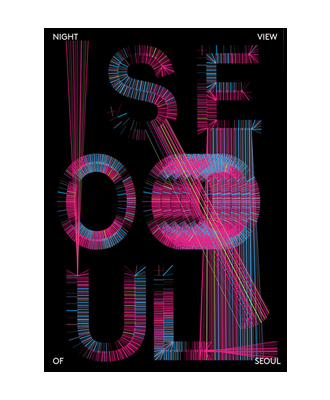
Printed at A0 [841 × 1189 mm] on day-glow magenta, lightweight flyposter paper.

why not associates is a british graphic design company with global reach.
we turn our passion for design into commercial success for clients in business, government and the public sector.

for nearly two decades, why not associates has been creating innovative work for clients large and small. our team works in many different media
on many types of projects, including corporate identity, digital design,
motion graphics and television commercial direction, editorial design, environmental design, publishing, and public art.

this breadth of experience means that we can orchestrate complex campaigns for global brands such as nike, first direct bank, virgin records and the bbc. we also cherish smaller locally based commissions such as public relations for regional government and public art installations for specific communities. regardless of size, we collaborate closely with clients
to come up with a solution that we can all be happy about. effective communication contains an element of surprise and often the best way to solve a problem is to turn it on its head. we're not afraid to run through a dark room with an arm full of lighted fireworks. fingers grow back, and
great work lasts forever.

yes, we're known for pushing boundaries. but our experiments always serve our client's purpose; which is why so many of them keep coming back to us project after project.

I JUST WANT TO BE PERFECT

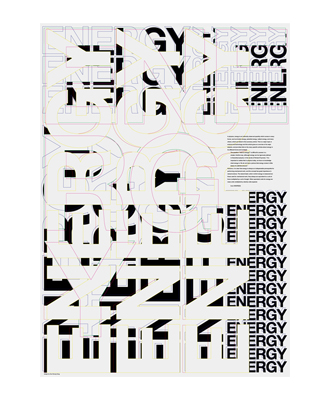
Connection is the energy

language game
form of life
Ludwig Wittgenstein

Braun Typography standards

1.1
Sans-serif (grotesque) types are used without exception. The type preferred by Braun is Helvetica. Substitutes are Akzidenz-Grotesk and Folio. Other grotesques, such as Futura are not allowed. (Where this is justified by the content, typewriter may be used.)

1.2
Normal facem in special cases also light face, is used for body copy. Bolder face and italics are reserved for special emphasis.

1.3
italics or underlining may be used for emphasis in running copy; semi-bold(mediun-type) is less preferred and letter-spacing or CAPITAL letters never used. To emphasize or set apart large portions of the text, italics, semi-bold type or underlining is used, never full-measure setting in CAPITAL letters.
1.4
Columns are set in a moderate flutter-right setting; word division is allowed in order to fill in the column width. Block setting with all lines of uniform length is not to be used.
1.5
Lines are set to form a straight margin on the left; the first lines of paragraph should not be idented.

1.6
Body copy should never be set on centre axis.

1.7
Body copy is never set with varying line length to form a contour around free-standing motives. The type never penetrates into the picture. A suitable distance should be maintained, above and below pictures - at least one line spacing.

1.8
Line are normally 1 or 2 point leaded. Solid setting may be used only for very short lines.

1.9
Intermediate spaces between paragraphs are genuine line spacing with the same point leads as set line.

1.10
Type size and line length, depending on the medium, should promote legibility and not attract attention by their unusualness.

Headings

2.1
Item 1.1 is valid for the point of headings. Headings are also never set in capital letters.

2.2
For headings, compact type face with relatively narrow letter and inter-word spaces is preferred. The impression of is to be avoided. The type thickness should differ noticeably from the one used for the body copy.

2.3
The number of different type sizes within a single printed item should be restricted (generally to three or less).

2.4
Headings may be set on centre axis only in exception cases. Centre axis symmetry is not regarded as a design form typical of Braun.

Company name and logo

3.1
Where the firm name Braun appears within the text, it is always set in the normal letters of the type used in that text. In particular, it does not appears as logo-sign BRAUN and not in capitals BRAUN. (This applies also to typewritten texts.)

3.2
The company logo is treated in typographical respects not as a word but as a sign. It is never combined typographically with other words to form a visual unit.

3.3.
The company logo is always surrounded by free space, with a minimum width of one logo on the left and right side, and a minimum height of one logo above and below.

3.4
Positioning of the logo should be distracted by the reference lines, for example, the limits of the type area, the type line of the heading, the picture edges, etc. Centre axis positioning is not typical of Braun.

making
design studio
for
real artist

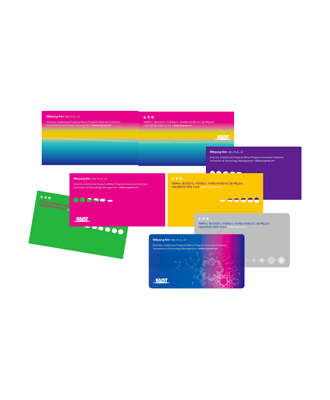
namecard
2011calendar
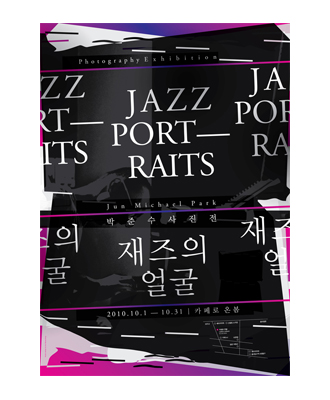
Il Postind / European Jazz Trio

project
VIRUS VIRUS VIRUS VIRUS VIRUS VIRUS VIRUS VIRUS VIRUS VIRUS VIRUS VIRUS VIRUS VIRUS VIRUSVIRUS VIRUS VIRUS VIRUS VIRUS

If you are a designer, I urge you to study and understand grids. If you are a business owner, please question your designers about their use of grids and the thought process behind them. Grids are tools that we should learn to use and recognize, since it is up to us to create a future rich with effective and engaging communications.

“Quality of life is not a question of speed.
It’s a matter of rhythm.”

KM told me a stoty about discovering for himself
the effects of a parallax view - how, seen from the window seat of a train, it set off a kind of moire in the
relief forms of the Dutch countryside.
_'Every day, as a students, I made the journey
between Nijmegen and Arnhem, and from the train I would notice patterns forming and transforming in the
passing landscape. Outside, in the fileds of crops,
in the relief made by hundreds of bean sticks for exam-
ple, my eye would follow the shifting screen effect pro-
duced as the angle and perspective changed and the
train went by.'
_'Seeing the fields in this way was an how a group of
things adds up to something else, fifty or more of the
same things, a system.
And the effect of movement and perspective on these
squares of crops made me aware of the importance of a
frame, and of sets of thigs co-operating = inside a frame.
This happens with things and it also happens with colour,
just as people react differently with different people,
one colouring the other.'
Not collections then, but groups of things,
their arragement, how they react.

Designer as publisher, Robin Kinross
And there is the fact that content is always embodied in its form, and so to make form is also to shape content.
it seems that editing is often neglected in the present designer-as-publisher processes.

Do you think it's still possible to create new images today?Yes, I'm positive. Because there are new events, whether critical, social... It's completely possible when you put together things not associated before. Photography, communication should open doors in your mind.
Could you work alone? I could but why would I! When you work with people you open up their minds and yours is richer. When I work with John Galliano, I see life through his eyes. It's exciting. Same thing with Maison Martin Margiela, Alexander McQueen or Gareth Pugh. These are people who have a colorful, different vision of the world. I worked a long time with Yohji Yamamoto and discovered Japanese aesthetic. I have no problem with them working in fashion, even if some consider that trivial.
Nick Knight

Mr. Igarashi’s philosophy about his work is best summed up in these words: “My approach to design and sculpture has always wavered between my wish to do something useful for the society and my desire to create something beautiful with my own hands. In my opinion, there are three essential things in work: passion, challenge, and discovery. Without them, work gets boring; with them work is enjoyable. And artwork which is enjoyable also results in success.”
-
“Designed by Apple in California, Made in China”
-
Grew up in Hong Kong playing ping pong.
Traveled half way around the globe at 17 speaking half the language.
Studied Economics and Linguistics @ U of T.
One day I realized life is so much more than numbers, I bought a camera and started recording history. Hope to make a difference with images.
-Harry Choi

designing as writing

SERENDIPITY

It is you who decide your future

[visual] writing
a [visual] composition lesson

norm
normal
normality

Mum mum mum maH Mum mum mum maH Mum mum mum maH Mum mum mum maH Mum mum mum maH Mum mum mum maH Mum mum mum maH Mum mum mum maH Mum mum mum maH Mum mum mum maH Mum mum mum maH Mum mum mum maH Mum mum mum maH
-LADY GAGA

10 design principles
01 Good design is innovative
02 Good design makes a product useful
03 Good design is aesthetic
04 Good design helps us to understand a product
05 Good design is unobtrusive
06 Good design is honest
07 Good design is durable
08 Good design is consequent to the last detail
09 Good design is concerned with the environment
10 Good design is as little design as possible
-Dieter rams

“I am not sure what an ideal education in type looks like. I would say that I am a believer in an apprentice-style system, which is how I learned at Font Bureau. I believe in teaching a specific method for drawing type and learning from experience. I think the best thing someone can do to learn to draw type is to draw as many different kinds of typefaces as they can.”
-Cyrus Highsmith

“Why be rebellious all the time?” asks Grootens. “Let’s concentrate on content. In the Netherlands rebellion is often mistaken for intelligence.”
Content, however, can be the powder keg of revolution.
-Joost Grootens

I love books

Practice makes perfection. It's all from my head. You have your own way -if you become an expert you have your own way of doing things.
-Joseph Churchward

How to Work Better
1. Do one thing at a time
2. Know the problem
3. Learn to Listen
4. Learn to ask Questions
5. Distinguish Sense from Nonsense
6. Accept change as Inevitable
7. Admit Mistakes
8. Say it simple
9. Be Calm
10. Smile
-Fischli & Weiss

chutzpah!

I don't like
luxury in typography
the use of gold
or brilliant paper
i prefer the rough
in contour and surface
torn forms

Our favourite teacher at the Rietveld Academy (Amsterdam) was Linda van Deursen. The most important thing she imparted to us was a certain mentality, a state of mind. She never romanticized graphic design or tried to create an aura of mystery around it. She has a totally no-nonsense attitude.
-Experimental Jetset